Base editing
A precision gene-editing method that chemically converts one DNA base to another without cutting both strands of the double helix.
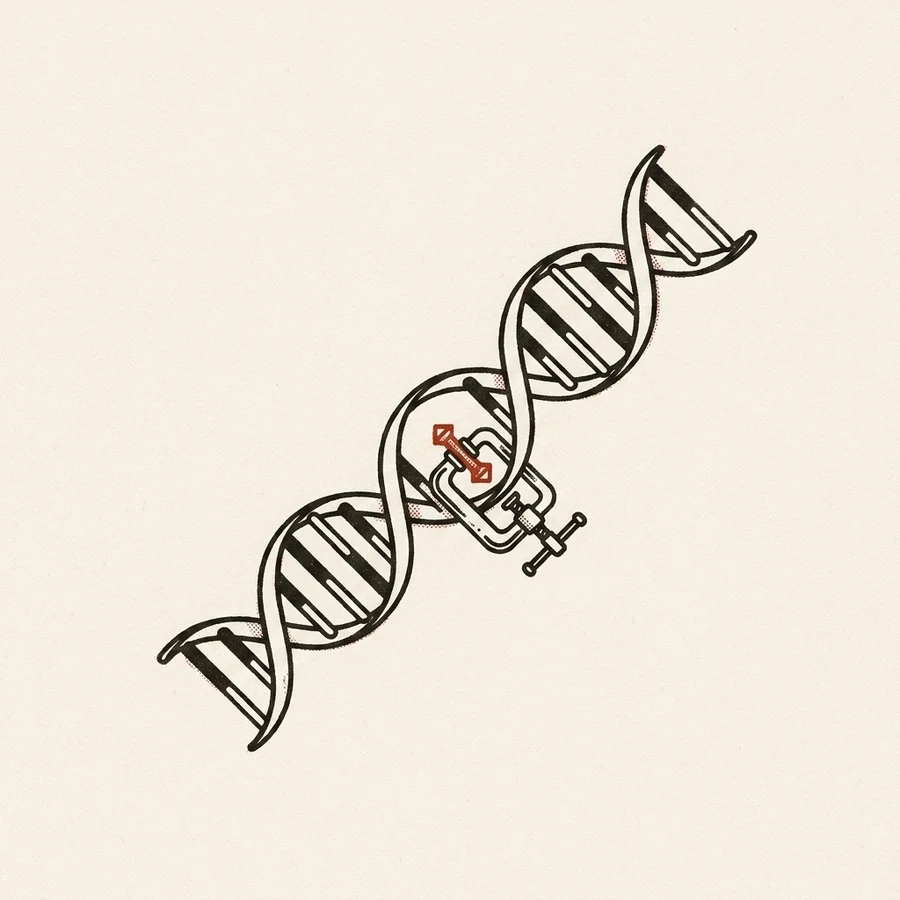
Standard CRISPR makes a double-strand break then relies on the cell's repair machinery — imprecise and liable to unwanted insertions or deletions. Base editors bypass that: a deactivated or nicking Cas protein positions a fused deaminase enzyme over the target nucleotide, which chemically rewrites it in place (C→T or A→G) without severing both strands. The result is a predictable single-letter change. The hard part is off-target edits elsewhere in the genome and, in RNA base editors, unintended transcriptome-wide changes.
Where it came from
In megatrends
Related players
Finds citing this concept
Overall = breadth + depth + substance + ½·novelty

The fix was the wrapper
A single IV infusion made one permanent DNA edit in the liver and cut LDL cholesterol by up to 62% — but the new result is that swapping the delivery vehicle cleared the safety signal that halted the first attempt.