The 445-byte world map
A recognizable map of the whole world, squeezed into 445 bytes — by making the land more solid, not less.
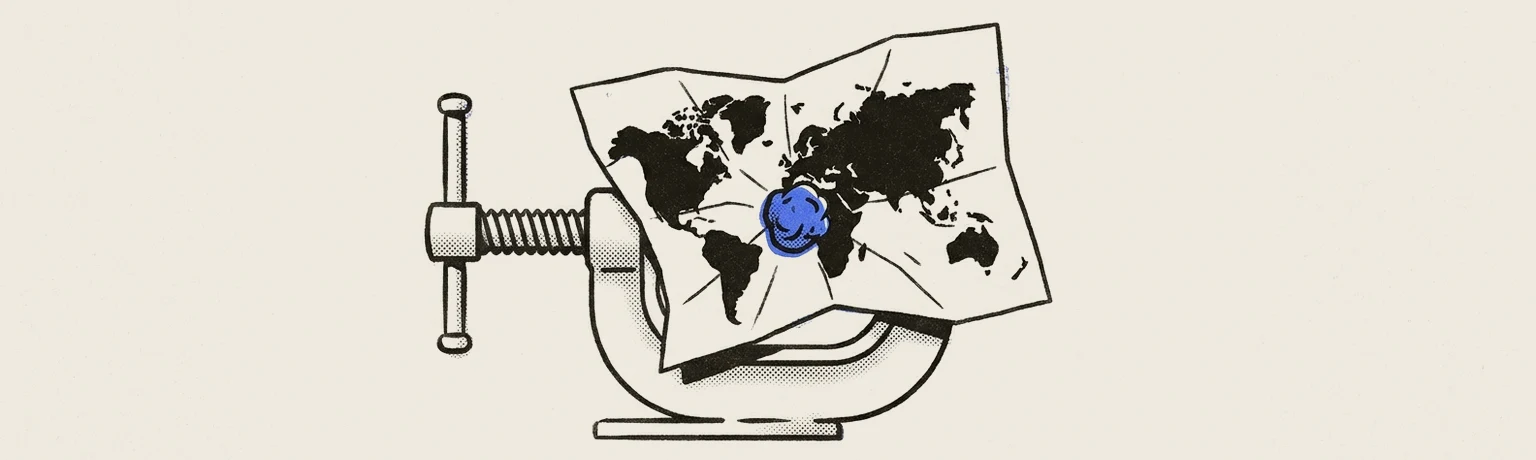
The intuition is that a smaller drawing should make a smaller file: sketch the coastlines as a thin outline, skip the interior, save bytes. The author of this hack found the opposite. Filling every landmass with solid runs of a single character — a wall of asterisks, cropped to a tight box — and then compressing it produces a *smaller* file than the sparse outline does. The finished world map is 8,523 characters of text that a general-purpose compressor squeezes down to 445 bytes, under a self-imposed 500-byte target, and it still reads as Earth.
The reason is a fact about how compression works. Deflate, the everyday algorithm behind zip files and web pages, earns its savings by spotting repetition — long predictable stretches of the same thing. A filled continent is thousands of identical characters in a row, exactly the pattern it collapses best. A coastline outline is all edges and gaps, sparse detail that gives the compressor little to grab. So the winning move isn't to draw a simpler map; it's to draw one shaped for the machine that will crush it.
It is a small, self-contained delight rather than anything anyone will deploy — an entry in the decades-long code-golf tradition of fitting improbable things into a kilobyte. One detail lands, though: the author reports that an AI coding assistant kept steering toward vector graphics, which pay a price per coordinate and stop looking like the world once trimmed enough to fit. The human insight — invert the intuition, feed the compressor what it loves — is what got under 500 bytes.
The lenses
The facts
Concepts
How this connects
Tap a node to open it